How to Extend the Life of Your HVAC System
Protecting One of Your Home’s Most Important Investments
Your heating and cooling system works quietly in the background to keep your home comfortable through changing seasons. Because it runs for hundreds or even thousands of hours each year, normal wear is unavoidable. However, premature breakdowns are not. Many of the problems that shorten a system’s service life develop gradually through restricted airflow, neglected maintenance, poor operating habits, or small mechanical issues that go unnoticed.
Extending the life of the equipment does not require complicated daily work. It depends more on consistency than intensity. Replacing filters on time, keeping vents clear, scheduling inspections, and responding quickly to changes in performance can reduce strain on motors, compressors, fans, and electrical components. These steps also help the system maintain steady temperatures without running longer than necessary.
Homeowners should also recognize that efficiency and longevity are closely connected. When equipment operates under difficult conditions, it consumes more energy and experiences more wear. A system that receives proper care can run more smoothly, maintain better indoor comfort, and avoid many preventable repairs.
The following strategies explain how to reduce unnecessary stress, identify problems early, and create practical maintenance habits. While no mechanical system lasts forever, thoughtful care can help homeowners get the greatest possible value and performance from their equipment before replacement becomes necessary.
Schedule Routine Professional Inspections Every Year
Annual professional inspections are one of the most effective ways to prevent minor issues from becoming serious mechanical failures. Even when the equipment appears to be working correctly, internal parts may be wearing down, electrical connections may be loosening, and dirt may be collecting on important surfaces. These conditions are often difficult for homeowners to identify without specialized tools and training.
A qualified HVAC company should inspect the system before the season when it will face its heaviest workload. Cooling equipment is commonly serviced in spring, while heating equipment is often checked in fall. Scheduling early allows enough time to complete repairs before extreme temperatures create urgent demand. It may also be easier to arrange an appointment before service providers become busy with emergency calls.
A thorough maintenance visit involves much more than a quick visual check. The technician may inspect electrical connections, test safety controls, examine belts and motors, clean coils, check drainage, measure airflow, and confirm that the thermostat is communicating properly with the equipment. Depending on the type of system, the visit may also include checking fuel connections, burners, refrigerant pressures, or combustion performance.
These inspections help uncover problems that can place additional strain on major components. For example, a weak capacitor may make a motor struggle to start. A clogged drain may allow moisture to collect around the system. Dirty coils can force equipment to run longer to reach the desired temperature. Each of these issues can increase wear if left uncorrected.
Homeowners should ask what is included before purchasing HVAC services. A low-cost tune-up may cover only a limited inspection, while a more complete maintenance plan may include cleaning, testing, priority scheduling, and discounts on repairs. Understanding the scope of the visit makes it easier to compare providers and choose useful preventive care.
Keeping service records is also valuable. Documentation can reveal recurring problems, show when parts were replaced, and help a technician identify long-term changes in performance. Records may also be important for warranty requirements, since some manufacturers expect proof of regular professional maintenance.
Working with the same trusted provider over time can make inspections more useful. A technician who is familiar with the equipment can compare its current condition with previous visits and notice gradual changes. This ongoing history may help homeowners plan for repairs or future replacement instead of being surprised by a sudden failure.
Professional visits do not eliminate the need for basic homeowner care, but they provide a deeper level of protection. By combining annual inspections with simple routine maintenance, homeowners can reduce stress on the equipment and improve the likelihood of dependable performance throughout each season.
Replace Filters and Keep Airflow Unrestricted
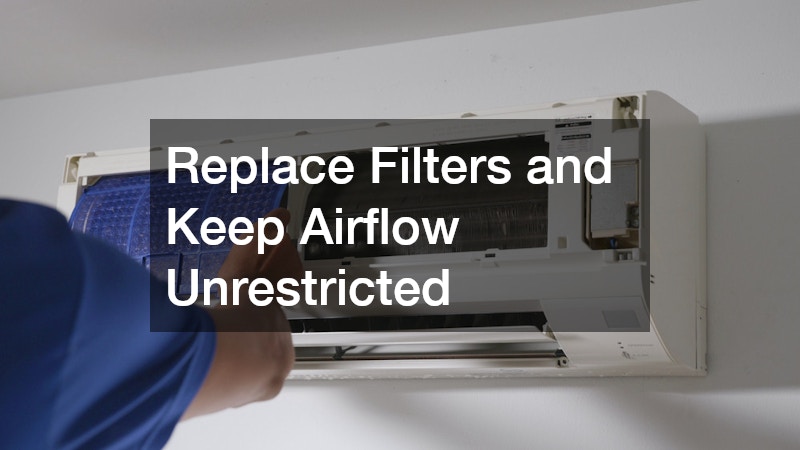
Airflow is essential to the health of any residential HVAC system. Heating and cooling equipment depends on a steady supply of air moving through the return ducts, across internal components, and back into the home. When that flow is restricted, the equipment must work harder to maintain the thermostat setting.
The air filter is one of the most common sources of restriction. As it collects dust, hair, pollen, and other particles, it becomes increasingly difficult for air to pass through. The blower may need to run longer or work against greater pressure, which can increase energy use and wear. In cooling mode, poor airflow may also cause the indoor coil to become too cold and freeze.
Filter replacement frequency depends on several factors. A basic filter may need to be changed every month, while a thicker high-capacity filter may last several months. Homes with pets, smokers, ongoing construction, or family members with allergies may require more frequent replacement. Homeowners should inspect the filter regularly instead of relying only on a calendar.
The replacement filter must also be the correct size and type. A filter that does not fit properly may allow dust to bypass the media and enter the equipment. A filter with an excessively high efficiency rating may restrict airflow if the system was not designed for it. An AC maintenance company can recommend an appropriate option based on the equipment and household needs.
Vents and return grilles should remain open and unobstructed. Furniture, rugs, curtains, storage boxes, and other household items can interfere with circulation. Closing too many supply vents is also not an effective way to save energy. It may increase pressure in the ductwork and cause the blower to operate under more difficult conditions.
Homeowners should occasionally vacuum accessible vent covers to prevent dust buildup. If rooms remain uncomfortable even when the vents are open, the problem may involve damaged ducts, poor system balancing, or insufficient insulation. Professional testing may be needed to locate the source of the airflow problem.
The outdoor unit also requires clear space around it. Leaves, grass clippings, weeds, and debris can block the movement of air through the coil. Shrubs should be trimmed back, but the unit should not be surrounded by an enclosure that traps heat. During winter, snow and ice should not be allowed to block airflow around equipment that continues to operate.
Indoor equipment should remain accessible as well. Storing boxes or household items against the unit can make maintenance more difficult and may interfere with ventilation. Keeping the area clean allows technicians to inspect the equipment and reduces the amount of dust that may be pulled into the system.
Airflow problems often develop slowly, which makes them easy to overlook. The house may still reach the desired temperature, but the equipment may take longer to do so. By maintaining clean filters and clear air pathways, homeowners can reduce operating stress and help important components last longer.
Address Small Problems Before They Become Expensive Repairs

Mechanical systems rarely fail without warning. Subtle signs often appear before a major breakdown, and early attention can prevent additional damage. Delaying service may allow one failing part to stress others.
Unusual sounds are key warning signs. Rattling may indicate loose panels, while squealing can relate to belts or motors. Grinding, banging, or repeated clicking should never be ignored. Weak airflow may signal a dirty filter, failing blower, blocked duct, or frozen coil. Uneven temperatures can point to airflow imbalances, thermostat issues, or duct leaks. If the system runs constantly without maintaining comfort, it may be struggling with efficiency or mechanical problems.
Prompt air conditioning repairs are essential when short cycling occurs. Frequent on-and-off cycles strain components and may result from thermostat placement, airflow restriction, refrigerant issues, or oversized equipment. Higher utility bills can also indicate declining efficiency, especially when weather conditions remain consistent.
Moisture around indoor equipment should be addressed quickly. While some condensation is normal, pooled water may indicate a clogged drain or frozen coil. Unpleasant odors also require attention. Burning smells may signal electrical issues, while musty odors suggest moisture buildup. Gas or fuel odors require immediate shutdown and professional help.
Professional heating and air conditioning services should be used when problems persist or involve internal components. Monitoring runtime, airflow, and temperature consistency helps identify changes early. Addressing issues promptly protects major components, reduces strain, and helps prevent costly breakdowns.
Maximize Efficiency With Proper Equipment Care
Different types of equipment require specific maintenance. Heat pumps, for example, provide both heating and cooling and often run year-round, which can increase wear compared to single-purpose systems.
Regular heat pump service should include inspecting coils, electrical components, the reversing valve, refrigerant performance, drainage, and defrost controls. In cold weather, frost may form on the outdoor unit, but persistent ice can signal a problem requiring professional attention.
Homeowners can help by keeping the outdoor unit clear and ensuring water does not drain onto it. Avoid chipping ice from coils, as this can cause damage. If ice does not clear during normal operation, a technician should inspect the system.
Clean coils are essential for efficient heat transfer. Dirt buildup forces the system to work harder, increasing energy use and strain on the compressor. Outdoor coils collect debris like leaves and pollen, while indoor coils may become dirty if filtration is poor.
Proper AC installation is critical for long-term performance. Systems that are too large or too small can cause inefficiency and uneven comfort. A professional load calculation and duct evaluation ensure correct sizing and airflow.
Installation quality affects efficiency, safety, and reliability. After installation, homeowners should follow maintenance guidelines, register warranties, and use proper thermostat settings to protect their investment.
Improve Everyday Habits That Reduce Wear and Tear

Daily operating habits have a major effect on how hard the system works. Constantly changing the thermostat or allowing large temperature swings can increase runtime and wear. Maintaining steady settings helps support both comfort and longevity.
A programmable or smart thermostat can simplify this process by creating a consistent schedule based on when the household is home, asleep, or away. Moderate adjustments are easier on the equipment than extreme setbacks followed by rapid recovery. Proper thermostat placement is also important. It should be kept away from direct sunlight, exterior doors, and appliances to prevent inaccurate readings and unnecessary cycling.
Homeowners should avoid setting the thermostat far below the desired temperature to cool the home faster. Most systems operate at a steady rate, so extreme settings only cause longer run times. Experienced ac contractors often recommend addressing issues beyond the equipment itself when performance declines. Air leaks around windows, doors, and attic openings allow conditioned air to escape, increasing the system’s workload.
Improving insulation, especially in the attic, can reduce heat gain in summer and heat loss in winter. Window coverings also help manage indoor temperatures by limiting solar heat during the day and retaining warmth at night. Ceiling fans can improve comfort by circulating air, allowing for more moderate thermostat settings.
Keeping doors and windows closed while the system runs and limiting exhaust fan use can further reduce strain. Scheduling seasonal heating and cooling services ensures the system is prepared for heavy use and helps prevent avoidable wear.
Building Better Habits for Years of Reliable Comfort

Extending the service life of heating and cooling equipment is largely a matter of reducing avoidable strain. Clean filters, open vents, consistent thermostat settings, and clear outdoor equipment all help the system operate under better conditions. These basic habits require little time but can make a meaningful difference over many years.
Professional inspections provide another important layer of protection. They allow trained technicians to identify worn parts, electrical concerns, drainage problems, and performance changes before they lead to larger failures. When repairs are needed, responding quickly can protect other components from secondary damage.
Homeowners should also consider the entire building rather than focusing only on the mechanical equipment. Air sealing, insulation, window coverings, and thoughtful temperature settings reduce the workload required to keep the home comfortable. The less unnecessary work the system performs, the less wear it experiences.
No maintenance routine can guarantee that equipment will never fail. Age, usage, climate, and installation quality all affect service life. However, consistent care can improve reliability, lower operating stress, and help homeowners avoid replacing the system earlier than necessary.
A simple maintenance calendar can make these responsibilities easier to manage. By checking filters monthly, scheduling seasonal service, watching for performance changes, and maintaining clear airflow, homeowners can protect their investment and enjoy steadier comfort for years to come.