How Outdoor Upgrades Around Your Home Affect Your Ac’s Workload
Your air conditioner does not work in isolation. Everything around your home, from the trees in your yard to the surface of your driveway, changes how much heat builds up outside and how hard your system has to work to counter it. If you have noticed rising energy bills or an AC that seems to run constantly, the answer might not be inside your house at all. Understanding how outdoor upgrades influence cooling can help you make smarter decisions that save money and extend your system’s life.
Roof Condition and Attic Heat Buildup
Your roof absorbs more direct sunlight than any other surface on your property, and that heat radiates downward into your attic and living space for hours after the sun sets. An aging or poorly ventilated roof can turn your attic into an oven, forcing your AC to fight a constant uphill battle just to keep interior temperatures stable. Reflective or lighter-colored roofing materials reduce this heat absorption significantly compared to dark, worn shingles.
Bringing in experienced roofers to assess ventilation, insulation, and material choice can make a measurable difference in your cooling costs. Many homeowners are surprised to learn that a roof upgrade pays for itself partly through reduced energy consumption over time.
- Ask about radiant barrier installation during any roofing project
- Consider light-colored or reflective shingles for hotter climates
- Ensure attic ventilation is not blocked by insulation
- Schedule an inspection if your roof is over 15 years old
Window Coverings and Direct Sun Exposure
Windows are one of the biggest sources of unwanted heat gain in most homes, especially those facing south or west. When sunlight pours directly through glass all afternoon, your indoor temperature can climb several degrees even with the AC running, forcing the system to cycle almost continuously just to hold a stable setpoint. Unshaded, west-facing windows are often the worst offenders, since they catch intense late-day sun right when outdoor temperatures already peak. Exterior shading options block heat before it ever reaches the glass, which is far more effective than trying to cool a room after the sun has already heated it. Solar screens, awnings, and exterior shutters can stop a large share of incoming solar heat, while retractable awnings offer the flexibility to shade windows only when the sun angle demands it. Even simple additions like exterior roller shades or well-placed pergolas can noticeably cut afternoon heat buildup. Interior solutions like blinds or curtains help too, but they work by absorbing heat after it’s already inside, so they’re generally less effective on their own. For homeowners weighing upgrades, pairing exterior shading with reflective or low-E window film can further reduce the load on your AC without sacrificing natural light.
Installing outdoor solar shades over problem windows is one of the simplest ways to reduce solar heat gain without sacrificing natural light or the view. Unlike interior blinds or curtains, these shades intercept sunlight before it ever reaches the glass, which makes them far more effective at keeping heat out of your home in the first place. West- and south-facing windows tend to benefit the most, since they absorb the strongest afternoon rays. Outdoor solar shades can lower glass surface temperatures by 20 degrees or more, depending on the fabric’s density and openness factor, easing the burden on your cooling system during peak afternoon hours. When choosing shades, consider the fabric’s “openness factor,” which affects how much light versus heat passes through—tighter weaves block more heat but reduce visibility slightly. Motorized options add convenience, letting you retract shades automatically based on sun position or time of day. Even a modest reduction in solar heat gain across two or three windows can translate into your AC cycling less frequently, which adds up to real savings over a full cooling season.
- Target west and south facing windows first since they receive the most intense afternoon sun and drive the biggest cooling loads
- Choose exterior shade fabrics with a 5-10% openness factor to block heat while still allowing some airflow and outward visibility
- Combine exterior shades with interior blinds or cellular shades for added insulation at night and during winter months
- Look for UV blocking percentages of 90% or higher when comparing products, since this also protects furniture and flooring from fading
- Consider retractable awnings for windows where you want sun exposure in winter but shade in summer
- Check the fabric’s solar heat gain coefficient (SHGC), as a lower number means less heat transferred indoors
Patio and Deck Shade Structures

Outdoor living spaces do more than extend your entertaining area; they can also influence how much heat transfers into your home. A patio or deck attached directly to your house without any shade often reflects sunlight onto exterior walls and windows, adding to your cooling load. Light-colored concrete or pavers can bounce a significant amount of solar radiation directly onto siding and glass, and that secondary heat gain is easy to overlook since it doesn’t come from direct sun exposure alone. Shade structures placed strategically over these areas reduce that reflected heat and keep adjacent rooms noticeably cooler. Pergolas with louvered or retractable canopies, solid-roof patio covers, and even large market umbrellas each block a different percentage of sunlight, so the right choice depends on how much relief you need in your hottest months. A well-positioned structure can drop surface temperatures on a deck by 20 degrees or more, which translates into less heat radiating toward the house. Placement matters as much as the structure itself. Shading the west- or south-facing side of your home, where afternoon sun hits hardest, delivers the biggest reduction in AC workload, while covering a north-facing patio offers less benefit. Attaching the shade structure with a slight gap from the house, rather than sealing it directly against the wall, also helps hot air vent away instead of collecting against your siding and windows.
Retractable awnings offer a flexible solution because you can extend them during peak sun hours and retract them when shade is not needed. Most models cover between 10 and 20 feet of patio or deck space, and many now come with motorized controls, sun sensors, or wind sensors that automatically adjust the awning based on outdoor conditions. This kind of coverage can block a significant portion of direct sunlight from hitting nearby windows and exterior walls, which in turn reduces the amount of heat that transfers indoors. This adaptability makes retractable awnings a practical choice for homeowners who want control over both temperature and light without committing to a permanent structure. Unlike a fixed patio cover, an awning can be retracted during cooler months to let sunlight warm the home naturally, easing the burden on your heating system. During the summer, extending it over south- or west-facing windows can noticeably lower indoor temperatures during the hottest parts of the afternoon. When choosing an awning, consider fabric quality, frame durability, and whether manual or motorized operation better fits your routine. Higher-end acrylic or vinyl-coated fabrics tend to resist fading and hold up better against wind, while sturdier aluminum or steel frames last longer in areas prone to storms. Taking the time to match these features to your climate can make a measurable difference in how much relief the awning provides your air conditioning system over the years.
- Extend awnings during peak sun hours, typically 12 p.m. to 4 p.m., to block heat before it radiates toward windows and siding
- Choose weather-resistant fabric rated for UV exposure, ideally with a UPF rating of 50+ for maximum heat and glare reduction
- Position awnings to shade both the patio and adjacent windows, cutting indoor temperatures near those rooms by several degrees
- Consider retractable pergola covers or louvered roofs for larger patios where fixed shade isn’t practical
- Angle awnings to account for seasonal sun position, steeper in summer, shallower in fall and spring
- Retract awnings during storms or high winds to prevent damage to the mechanism and fabric tears
Gutter Function and Moisture Around the Foundation
It might seem unrelated to cooling, but poor drainage around your home can indirectly affect your AC’s workload. When water pools near the foundation, it increases humidity levels around the base of the house, and that moisture can seep into crawl spaces or lower levels. Higher humidity makes your air conditioner work harder because it has to remove excess moisture in addition to lowering temperature.
Proper gutter installation ensures rainwater is directed away from your foundation instead of collecting near your exterior walls. Clean, well-functioning gutters reduce the moisture load your HVAC system has to manage, which is especially important in humid climates where dehumidification accounts for a large share of energy use.
- Clean gutters at least twice a year to prevent clogs
- Extend downspouts several feet away from the foundation
- Check for sagging sections that create pooling water
- Inspect seams and joints for leaks after heavy storms
Mature Trees, Canopy Cover, and Shade Placement
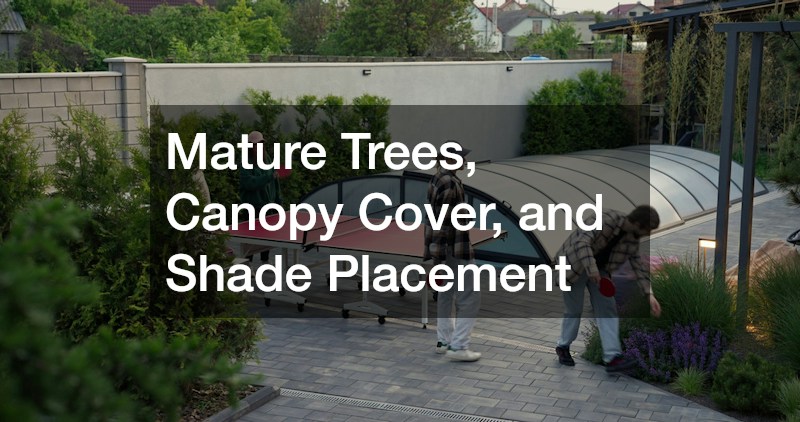
Strategic shade from trees can lower the temperature around your home by several degrees, reducing how hard your AC needs to work during summer months. Trees positioned on the east and west sides of a house block low angle morning and afternoon sun most effectively. However, trees that are dead, diseased, or growing too close to the roofline can create more problems than benefits, including blocked airflow around outdoor condenser units.
Sometimes tree removal is necessary when a tree poses a risk to your roof, foundation, or outdoor equipment, even though losing shade might seem counterproductive at first. A certified arborist or tree service can help you decide which trees to keep for cooling benefits and which ones need to go for safety reasons. Replacing a problematic tree with a better-placed, faster-growing species can restore shading benefits without the structural risk.
- Keep at least ten feet of clearance between branches and your roof
- Avoid planting large trees directly above outdoor AC units
- Trim canopy regularly to maintain healthy airflow
- Consult a professional before removing large or aging trees
Driveway and Walkway Surface Materials
Hardscape surfaces near your home absorb and radiate heat throughout the day, and that thermal mass can raise the ambient temperature around your house significantly. Dark asphalt surfaces are particularly effective at storing heat, which then radiates toward nearby walls and windows well into the evening. This is one reason homes next to large paved areas often report higher cooling costs than similar homes with more greenery nearby.
If you are planning asphalt parking lot paving for a driveway or shared property area, consider sealants and lighter aggregate options that reflect more sunlight instead of absorbing it. Landscaping buffers between paved surfaces and your home’s exterior walls can also help intercept some of that radiant heat before it reaches your living space.
- Choose lighter colored sealants to reduce heat absorption
- Add a landscaping buffer between pavement and exterior walls
- Consider permeable paving options for better heat and water management
- Schedule resealing every few years to maintain surface reflectivity
Fencing Materials and Airflow Around the Property
Fencing affects more than privacy and security; it also influences how air moves around your home and outdoor equipment. Solid wood or vinyl fencing can trap heat and block airflow near your AC’s outdoor condenser, making it work harder to dissipate heat effectively. Open-style fencing allows for better air circulation while still defining your property boundaries.
Many homeowners choose aluminum fence installation because the material does not retain heat the way darker solid panels can, and the open design supports better airflow around outdoor units. Positioning your fence line to avoid crowding the condenser gives your system the breathing room it needs to operate efficiently.
- Keep at least two to three feet of clearance around outdoor AC units
- Choose open picket or rail styles over solid privacy panels near equipment
- Avoid heat-retaining materials close to condenser placement
- Consider airflow patterns when planning fence layout
Storm Preparedness Structures and Equipment Protection
Severe weather can damage outdoor AC components directly, leading to inefficient operation or complete system failure right when you need cooling the most. High winds, hail, and flying debris are common culprits behind bent fins, cracked housings, and electrical issues in outdoor units. Protecting your property with a storm shelter for your family is important, but it is also worth thinking about how you protect the equipment that keeps your home comfortable.
Simple precautions like securing loose outdoor furniture and installing protective screens around your condenser can prevent costly damage during severe storms. A damaged unit often has to work harder even after repairs, since bent components reduce airflow efficiency permanently unless properly restored.
- Install a protective cage or screen around outdoor condenser units
- Secure or store loose patio items before storms arrive
- Schedule a post-storm inspection to check for hidden damage
- Trim nearby branches that could fall during high winds
Interior Upgrades That Complement Outdoor Efficiency
While most outdoor changes get the spotlight, some interior choices work alongside them to reduce overall cooling demand. Heat-generating surfaces and finishes inside your home can add to the load your AC has to manage, especially in kitchens where appliances and countertops absorb ambient heat throughout the day. Choosing materials that stay cooler to the touch and do not retain heat can complement the work your outdoor upgrades are already doing.
Quartz countertops are a popular choice partly because they resist heat buildup better than some natural stone alternatives, helping kitchens stay more comfortable during peak summer afternoons. Pairing interior material choices with exterior shading and ventilation strategies creates a more balanced approach to home cooling overall.
- Choose countertop materials with lower heat retention
- Pair interior upgrades with exterior shading for best results
- Use light colored interior finishes to reduce heat absorption
- Consider overall kitchen ventilation during renovation planning
Every upgrade around your home, from the roof over your head to the surface beneath your driveway, plays a role in how hard your air conditioner has to work. Small changes like adding shade, improving drainage, or choosing heat-resistant materials can add up to meaningful savings and a more comfortable home. Before your next outdoor project, think about how it might affect your cooling system, and consult professionals who can help you make choices that support both your home’s function and your energy efficiency goals. Taking a whole-property approach now can prevent bigger headaches and higher bills down the road.